Archive for the ‘Economics’ Category

China Building $8B Oil Refinery in Nigeria

Sunday, July 18th, 2010

In the news…

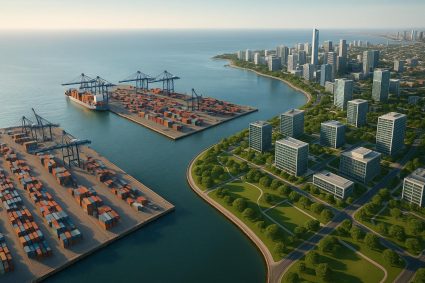
China is going to build an 8 billion dollar oil refinery in Nigeria. It is the first of 3 refineries that comprise a $23bn agreement between NNPC and CSCEC. Nigeria’s state oil company, NNPC, will cover 20% of the cost while the state of Lagos will provide the land. The China State Construction Engineering Corporation, CSCEC, will cover the additional 80% of the cost. Nigeria already has 4 oil refineries but they are run very poorly and are estimated to be operating at only 40% capacity. Due to this inefficiency, Nigeria has to import some refined oil.

China’s dependence on energy (especially in the form of fossil fuels) is increasing dramatically and will continue in a strong upward trend. New power plants will be built, and more energy will be expended. One of the most obvious indicators of the trend for increased fuel demand is the automobile market.

In the past year, China’s car market expanded by almost 40%. Contrast that to the U.S. where new car sales plunged more than 20 percent in 2009 to a 27-year low of 10.43 million vehicles, less than the 12.23 million sold in China during January-November, making the Asian giant the world’s largest car market for the first time. Since the year 2002, about 50% of all motor vehicles in China have been purchased by individuals instead of large corporations or the government previously. As incomes increase, the high annual growth rate of private ownership is expected to accelerate. A new generation of young adults is emerging in China. This generation demands higher wages, better working conditions, and new material possessions.

However the Chinese government is taking steps to slow inflation, curb overspending, and control the economy. China’s economy expanded 11.9 percent in the first quarter. China International Capital Corp. has said that it expects growth to slow to 7.5 percent by the fourth quarter.

More cars mean more fossil fuels. Therefore along with this comes an increased demand for energy, particularly in the form of fossil fuels, which is still the cheapest form of energy available. Moreover it appears the Chinese government is taking steps to obtain that oil independently, even if that means teaming up with Nigeria.

Ed Lowell, contributing writer

Russia to Diversify out of US Dollars

Wednesday, June 23rd, 2010

According to a recent Bloomberg article, Russia is adding Australian and Canadian dollars to its international reserves.  The Russian central bank deputy chairman, Alexei Ulyukayev along with Dmitry Medvedev have recently suggested that the world needs a new reserve currency and the US dollar no longer should be used.

Central banks around the world have been diversifying their own reserves out of the US dollar and into other gold and other commodity currencies like the Canadian dollar, Australian dollar and Brazilian real.  This shift in central bank policy around the world can have a significant impact on your wealth if you are completely in US dollars.

Most Americans believe the US is the land of milk and honey and will always be so.  History proves otherwise.  The US has been on a downward slide for many years and as the snowball rolling down the mountain, it has gained too much momentum to stop.

If you have all of your assets denominated in US dollars, now is the time to act.  You don’t want to be permanently tied to the woes of the US economy.  Diversify your assets through ‘geo-arbitrage’. 

From a practical standpoint, this just means to spread your wealth around the world.  Register a company in a low or no-tax jurisdiction.  Open a multi-currency bank account offshore.  Hold some of your investments outside of the US.  Buy real estate and gold.  But the time to act is now.  Tomorrow may be too late.

Small Business Tax Hikes – Asset Protection

Monday, June 21st, 2010

In a recent article from Bloomberg on June12th, Senator Snowe, a Republican from Maine, called the new jobs bill a ‘poison pill’ for small business growth and investment. 

Snowe is talking about HR 4213, so aptly named the “American Jobs and Closing Tax Loopholes Act of 2010″.  Ironically, the loophole that looks to get closed is going to destroy inflows of investment capital into small businesses.

Basically this new act has a provision that requires S-corporations to pay as much as 15.3% payroll tax on all  reinvested earnings.  This is the same tax that is paid to workers (although the worker pays half – 7.65%), but now will be applyed to any net income regardless of whether it is paid out or not. 

This is in addition to the regular income tax that small businesses must pay.  Keep in mind the top tax rate in 2010 is 35% federal and going to 39.6% in 2011.  In addition, for earners over $200,000 single or $250,000 married, there is an additional 3.9% medicare tax.  And we haven’t even talked about state taxes yet. 

For a high earning small business owner in the US, their tax rate could be as high as 65-70%!!!!  Talk about incentive for productivity…

While this may all sound like negative news, the time to plant multiple offshore flags is now.  I know this legislation is only proposed at this moment and subject to change, but the fact remains that US political leaders (and I use this term lightly) are increasingly looking to boost federal and state revenues by taxation as opposed to promoting increases in productivity.

This leads to confusion and uncertainty in the business world.  We need consistency in order to be productive.  Who wants to invest heavily in their business when they don’t know when the next law will get passed that taxes them into oblivion?  Or when the next sovereign debt default is going to happen and the US is the one confiscating retirement funds, ala Argentina 2001.

Now is the time to take action.  Plant multiple flags.  Diversify your assets.  Establish your business offshore and take advantage of low or no-tax jurisdictions.  Establish residency and/or citizenship in another country.  Remember, buying healthinsurance after a heart attack is too late.  Don’t make that  mistake with your wealth.

Norwegian Capitalists

Wednesday, April 28th, 2010

A few weeks ago I was  in Oslo, Norway and spent some time with some local friends.  These guys are not your typical Norwegian socialists (sorry if that offends anyone).  They are very much of the free market mindset.  These are entrepreneurs and investors.  This was my first trip to Norway and I was in for a shock.

The $11 beer and $50 pizza was a good starter.  And I don’t mean some exotic beer and pizza.  I’m talking Pizza Hut quality.  As I found out, Norway has a 200% alcohol tax because they determined citizens drank too much and wanted to eliminate this scourge of modern society, completely disregarding the concept of personal choice.  A basic Porsche 911 costs about $250,000.  A 700 square foot apartment in the city costs about $2500 per month.  Gasoline is about $9 per gallon.  And this is all created by taxation.  On top of that Norwegians pay between 35-50% income tax.  But they do have “free” healthcare.

This “free” healthcare system consists of wait times for basic procedures that can take from just a few weeks to several months before you can get an appointment.  Of course emergency care is quick, but what about an MRI?  Sure, we’ll see you in July.  They also have a great public transportation system.  But a one-way subway ticket costs about $5. 

Unfortunately this is the path I see for the US.  There are many similarities.  Norway even considers their system an improved American government.  Is this really the way we want to go in the US?  I have no interest in living in a place like Norway.  Sure their income is much higher.  A McDonald’s employee earns about $20 per hour, but a Big Mac meal costs $12.  How do they intend to attract competitive companies when the cost of doing business is so high?  Do we want to follow in those footsteps?

For one of my Norwegian friends, we were discussing a program that allows him to ‘escape’ Norway.  He sold his company a few years ago to a large tech firm in Norway.  This firm just recently sold out to a large US company and my friend’s job is now able to be done remotely.  We are looking at ways for him to invest offshore and defer his gains as well as structuring his life around a multi-flag lifestyle.  He will likely continue to work for his company in Norway earning a ridiculously high wage in Norwegian kroners, but he will move to warmer and cheaper climate where his income goes much further.  By doing this he can structure his own investment firm in one country, do his banking and investing in another, continue to earn an income in Norway, and live in another place.  There are also huge tax savings to be gained from this.  He is very interested in intelligent asset protection planning.

Now is the time for you to consider how you want to structure your life.  Maybe you won’t make such a drastic change, but you can too form your own offshore investment company and defer taxation.  You can restructure your business for maximum asset protection.  Or you can find a new country to live in.  But don’t wait until you cannot leave or you are paying $12 per gallon for gas and waiting 6 months for an MRI.  Live well.

A Flawed Tax System

Tuesday, April 20th, 2010

A few weeks ago I went to the local mall here in Tartu to buy some dress clothes.  I am not what you would call a ‘suit kinda guy’.  But I was going to an investment conference in Zurich and thought the usual jeans and a t-shirt may be a bit too casual. 

Whenever I am at the malls in different countries, I enjoy looking around at what the locals spend money one.  In this mall of about 50 stores, there are 5 electronic stores and another 6 that sell mobile phones and accessories.  There are also shoe stores, clothing stores, luggage, jewelry, several food establishments, and a really nice bookstore.  Anytime I am at a mall, my thoughts go to consumption and taxation.

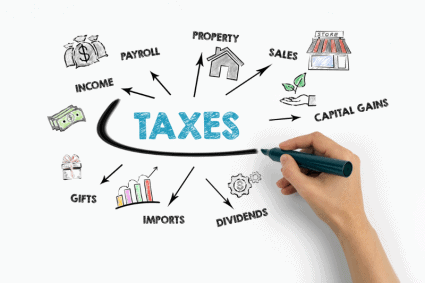
Lately I have been contemplating a major flaw in the US tax system.  We provide incentives for consumption and restrict production through our tax system.  Right now in the US if you put your money in a savings account you will earn less than 1% annually, not exactly a motivator to save.  And you can get a 30 year fixed mortgage on your house for 5% interest.  With money that cheap, that is a pretty good motivator to borrow.  We also have the highest corporate tax rate in the world and one of the highest personal progressive tax rates.  Companies are even taxed on dividends paid, and the investor is taxed again when he receives dividends!!!  We are taxing production and incentivizing consumption.

Contrast this with Estonia.  (Don’t get me wrong, they have their problems too, but the methodology of taxation is vastly different).  Estonian companies pay no corporate income tax!  If they retain earnings for reinvestment, there is zero tax.  Personal income is taxed at a flat 21% for all people regardless of level.  If a company pays shareholders dividends, they deduct the 21% from the dividend payment but the investor pays nothing additionally.  There is a 20% VAT (national sales tax) on all consumption.  You can borrow money at about 7% to buy a house, 20% to buy a car.  And you can earn 8% in your savings account.  The Estonian policymakers penalize you for consumption and reward you for savings.  Interesting concept…  Who do you think has a higher savings rate?

The point is the US tax system is backwards.  Just like the taxation of alcohol and cigarettes, the more you tax it, the less you get.  Do we want to keep taxing our productive activities like investing and saving money, and provide incentives for consumption?  Isn’t that what got us into this mess to begin with?

But more importantly, how do we profit from these situations and what is the implication for our asset protection planning?  Really, the options are virtually endless.  You can start by moving money into an offshore bank account and save and invest in another currency.  You can structure your business either domestically or offshore to provide you with the maximum tax advantages.  You can even move overseas to a low cost country where your money goes further.  In the near future I will discuss a couple of these strategies.

In the meantime, you should be considering how to implement your own asset protection planning strategy in order to minimize your risk and maximize your gain from this perverse tax system.  As stated before, there are several tools available to you depending on your level of wealth.  Call today for your free 30 minute consultation.


© 2009 Global Wealth Protection | Phone: +1-347-410-5041 | Fax: +1-775-319-2821
The information contained on this site is not and should not be construed as legal advice. Global Wealth Protection advises
its clients on asset protection and wealth preservation strategies based on a variety of legal, economic, geographic and other criteria.

Site Design by Sidecar | Global Wealth Protection's blog is powered by WordPress