Archive for the ‘Banking’ Category

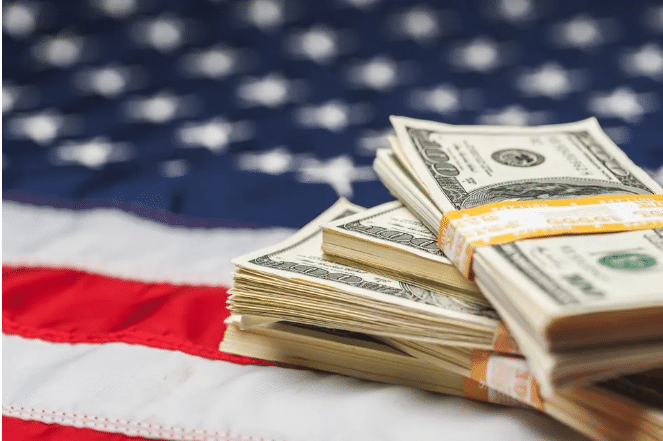
Russia to Diversify out of US Dollars

Wednesday, June 23rd, 2010

According to a recent Bloomberg article, Russia is adding Australian and Canadian dollars to its international reserves.  The Russian central bank deputy chairman, Alexei Ulyukayev along with Dmitry Medvedev have recently suggested that the world needs a new reserve currency and the US dollar no longer should be used.

Central banks around the world have been diversifying their own reserves out of the US dollar and into other gold and other commodity currencies like the Canadian dollar, Australian dollar and Brazilian real.  This shift in central bank policy around the world can have a significant impact on your wealth if you are completely in US dollars.

Most Americans believe the US is the land of milk and honey and will always be so.  History proves otherwise.  The US has been on a downward slide for many years and as the snowball rolling down the mountain, it has gained too much momentum to stop.

If you have all of your assets denominated in US dollars, now is the time to act.  You don’t want to be permanently tied to the woes of the US economy.  Diversify your assets through ‘geo-arbitrage’. 

From a practical standpoint, this just means to spread your wealth around the world.  Register a company in a low or no-tax jurisdiction.  Open a multi-currency bank account offshore.  Hold some of your investments outside of the US.  Buy real estate and gold.  But the time to act is now.  Tomorrow may be too late.

Obama’s Offshore Vendetta

Monday, May 24th, 2010

A few weeks ago I attended the Fonds Fair in Zurich.  I was there primarily to listen to a few key presentations including Jim Rogers speaking on the future of the commodities markets. While at the conference, I also attended a presentation given by the CIO of Blackrock discussing the energy market. It was quite enlightening and there will be lots of changes over the next 10 years in the energy market.

One of the most interesting things from the visit was the complete lack of interest in dealing with American clients when talking to Swiss private banks and investment advisors. Certainly you have all watched the news sometime in the past year and have heard about the situation involving UBS. This has had a profound effect on the offshore banking industry in Switzerland as the US tax department has bullied their way into getting the Swiss to break their own laws in order to not anger the beast.

And of course you can’t help but notice Obama’s vendetta against wealthy Americans who bank and do business offshore. He is trying to create a criminal image for anyone unpatriotic American who chooses to bank and do business offshore as part of their asset protection planning. Not to mention his proposed $1.9T (yes, that’s a T) tax increase on the wealthy.

Have we now produced the modern day Robin Hood? What you need to be aware of is that it is neither illegal nor immoral to diversify your assets offshore. In truth, offshore banking is one of the most prudent things you can do as part of your asset protection planning.  And with the internet and communication technology what it is today, it isn’t even difficult.

But you need to tread carefully in this water. There are many pitfalls you must be aware of. In order to maintain complete transparency, there are several details that must be attended to in order to make sure you don’t run afoul of any government agency. Properly set up entities and proper tax planning can reap huge rewards in both tax savings, investment opportunities, and asset protection. It seems the perfect storm is brewing for you to not just want, but need to diversify your assets offshore.

As I wrote about previously, there are legal ways to defer (not evade) taxation on your business and investments. There are also ways for you to move some of your banking offshore. The benefits from the tax savings alone can more than pay for your proper advisors to help manage this process for you.

Imagine compounding your earnings tax free for 10 years. What is that worth? With the increased taxation and likely stricter restrictions on moving assets offshore, now is the time to make this move. While this may seem complicated and not beneficial to some, it is really just an irrational fear.

Actually, many banks outside of the US are much safer than US banks. Many European banks keep 30% in reserves versus 10% reserves for US banks. And they are all guaranteed deposits by the ECB. And there are Asian banking options that are even more attractive.  If there is a run on the bank, who do you think is most able to weather the storm? If you wish to discuss your personal situation, I can advise you to your options. Contact me today for your free 30 minute consultation.

Swiss Private Banks Refusing US Clients

Wednesday, February 3rd, 2010

This week I am attending an investment conference in Zurich called Fonds 2010.  I spent the day walking through the exhibitor area speaking to Swiss private banks, investment firm managers, hedge fund managers, and most any other type of investment professional you can think of.

I approached one unnamed banker and asked if his company accepted US clients.  There were four of them standing in the area when I asked the question, and after asking, three of them scattered as if I dropped a grenade in the middle of them.  The remaining guy apparently was the low guy on the totem pole so he stayed to chat a bit. 

He told me that if I walked into his bank with a briefcase full of 100 dollar bills, he would have to ask me to leave.  He said it was just too burdensome to accept a US client.  They just weren’t interested.  He said the amount of money I would need to deposit and the fees they would have to charge, would be so high, it would offset any possible benefit.  The Swiss don’t want  your money.  And this is new under the Obama administration.

This was a common theme today.  I found investment advisors and bankers throughout the day that turned quite cold when they realized I was American.  I spoke to one very nice woman who worked for another unnamed Swiss bank who asked me to talk softer once she found out I was American.  She told me it her bank wasn’t interested in US clients no matter what the deposit amount would be.

I did however, find 2 banks willing to accept US clients.  I spoke with one of them at length today and have another meeting again tomorrow with them to discuss more details.  I have a meeting with the other arranged for later in this week.  Hopefully I can find a solution for clients interested in legal banking relationships in Switzerland.  I will update you again later this week.

For those of you serious about asset protection, you should seriously be considering a banking relationship outside of the US.  Maybe Switzerland is right for you, maybe not.  There are other countries where this is still possible, but I find it increasingly difficult to find banks willing to accept US clients. 

I am not suggesting tax evasion or hiding money, but keeping a portion of your wealth, legally, in a non-US bank makes it virtually impossible for  your account to be reached by creditors pursuing unscrupulous lawsuits.  And it gives you investing opportunities you may otherwise not have access to.

Currency controls – Part 2

Wednesday, December 30th, 2009

In the future, we may be restricted from wire transfers, cash transactions, owned foreign businesses, or many other controls policymakers can conjure up.  There is already discussion about any transfer of funds over $1,000,000 requiring approval from the US Treasury Department.  What if they decide to block your transfer of funds? 

A more serious threat to impending currency controls comes not from the domestic side, but from abroad.  If foreigners see more and more currency restrictions in the US, it reduces the incentive for investing.  If that happens, we will see a dramatic fall in the value of the US dollar.  This will be devasting to our economy.

The time to act is now.  Take precautions to protect your wealth.  Asset protection is not a strategy for only the super wealthy.  There are still opportunities to open foreign bank accounts.  Many banks outside of the US are much better capitalized and much safer than US banks and are deposits are protected by their governemnt’s central banking system.  There are investment opportunities outside of the US that most Americans are unaware of.  There are opportunities to take advantage of this as well. 

You can also own gold and real estate without any necessity for US reporting – at least for now.  Buying gold and holding it in a safe deposit box outside of the US or buying real estate can be a great option for many people.  In 1933 President Roosevelt confiscated all gold held by US citizens and devalued the dollar 60% in only a few short months.  Think it won’t happen again?

US citizens need to prepare for currency controls – Part 1

Tuesday, December 29th, 2009

There has been some talk lately about future currency controls in the US.  What we don’t realize is that we already have currency controls.  Have you ever flown outside of the US and had to fill out that form asking you to declare any currency over $10,000?  Do you know why they want to know this?

It is a means of controlling the outflow of hard currency outside of the US.  The government is trying to prevent you from taking a suitcase with $100,000 to your bank in Panama or Switzerland.  They don’t want a flight of capital from our domestic economy.  This is a form of currency controls.

In 2008, a law was enacted that forces all US citizens to pay estate tax and 10 years of income taxes upon expatriation.  For those of you that don’t know, expatriation is when you give up your citizenship and leave the country.  The purpose of this legislation was to stop wealthy citizens from leaving the US with their money in the midst of an economic crisis.  Yet another current form of currency controls.

What our policymakers don’t realize is that by enforcing currency controls like this, it has the opposite affect of the desired legislated purpose.  The purpose is to keep hard currency in the country, but smart entrepreneurs and investors know how to protect their assets.  They know how to move money and they look at early stages of currency controls as a warning sign of more serious, future currency controls.


© 2009 Global Wealth Protection | Phone: +1-347-410-5041 | Fax: +1-775-319-2821
The information contained on this site is not and should not be construed as legal advice. Global Wealth Protection advises
its clients on asset protection and wealth preservation strategies based on a variety of legal, economic, geographic and other criteria.

Site Design by Sidecar | Global Wealth Protection's blog is powered by WordPress